
Key Takeaways
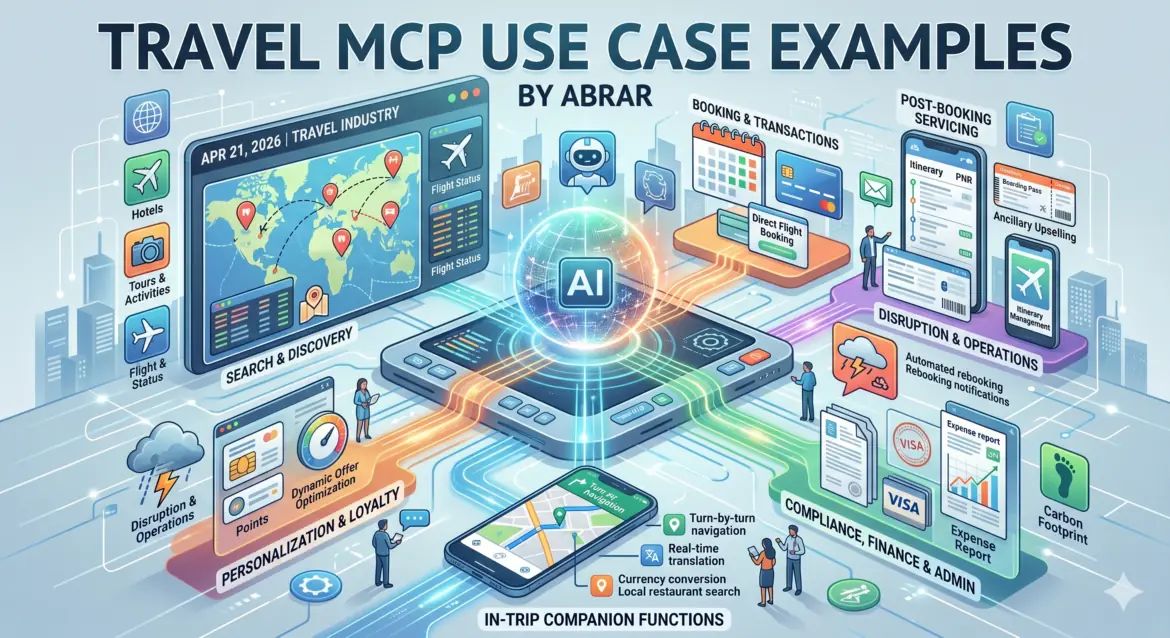
- Travel MCP servers enable AI agents to perform end-to-end travel tasks — search, booking, post-booking servicing, disruption management, personalization, compliance, and in-trip companionship.
- Each category represents a distribution channel that reduces integration costs and creates agent-ready APIs.
- This list is a starting point — the breadth of use cases is too vast to fully enumerate.
The breadth and use cases for a travel MCP server are too many to name.
Don’t let this list stop your imagination from thinking of entirely new travel MCP-specific ideas.
Here are some of the most basic Travel MCP server examples (I’ve given more in my Where are the Travel MCPs? post as well):
Search & Discovery
- Flight search
- Hotel/accommodation search
- Multi-city/multi-modal routing
- Tour & activity discovery
- Car rental search
- Cruise & ferry search
- Real-time flight status & tracking
- Destination guides
Booking & Transactions
- Direct flight booking
- Hotel booking
- Tour/experience booking
- Ride/transfer booking
- Bundled package booking
Post-Booking Servicing
- PNR retrieval & itinerary management
- Same-day rebooking
- Check-in & boarding passes
- Ancillary upselling
- Cancellation & modification
- Late arrival confirmations
Disruption & Operations Management
- Real-time disruption alerts
- Automated rebooking
- Duty-of-care notifications
- Weather-based risk intelligence
Personalization & Loyalty
- Loyalty program access
- Points & award travel optimization
- Memory-based personalization
- Dynamic offer optimization
Compliance, Finance & Admin
- Visa & compliance agents
- Expense filing agents
- Carbon/emissions reporting
- Travel policy enforcement
In-Trip Companion Functions
- Turn-by-turn navigation
- Live translation
- Currency conversion
- Restaurant & experience discovery
- Local transit
- Weather at destination
Developer & Distribution Strategy
- New AI distribution channel
- Reduced integration cost
- Agent-ready APIs
- White-label agent infrastructure